
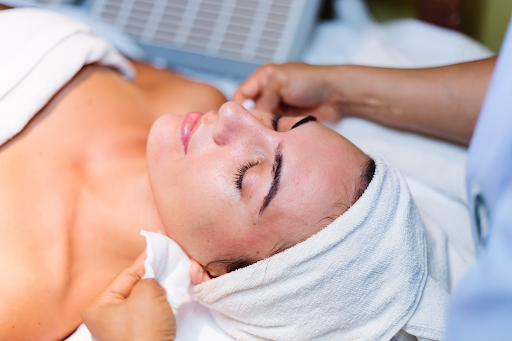
Dehydrated skin lacks water rather than oil that leads to dull and prematurely aged appearance. Hyaluronic acid is a praiseworthy solution for this problem as it draws moisture into the skin layers.
Key Takeaways
- Water vs. Oil Deficiency: Dehydrated skin is a temporary lack of water that can affect any skin type, whereas dry skin is a genetic condition caused by a lack of natural oils.
- Distinct Diagnostic Signs: Key indicators of dehydration include skin feeling greasy and tight simultaneously, dullness, fine lines when pinched, and sudden sensitivity to usual products.
- Multi-Layered Hydration: Hyaluronic acid functions as a powerful humectant, using multi-molecular weights to draw moisture into both surface and deeper skin layers to plump and strengthen the skin barrier.
- Proper Application Method: To prevent moisture loss and trap hydration effectively, hyaluronic acid serum must be applied to damp skin and immediately sealed with a moisturizer.
Imagine applying your daily moisturizer, only for your face to feel dull or strangely oily an hour later. If this sounds familiar, you are not alone. Dehydrated skin is a widespread issue that affects all skin types- even naturally oily skin. Incorporating a multi-molecular hyaluronic acid serum restores optimal moisture levels while supporting your skin’s protective barrier.
In this blog, we will discuss the key signs of dehydrated skin and the need for hyaluronic acid serum for skin.
What are the Differences Between Dry Skin and Dehydrated Skin?
Dehydrated skin is a temporary, treatable condition caused by a lack of water in the outer skin layers, affecting any skin type (including oily skin). In contrast, dry skin is a genetic skin type characterized by a chronic lack of natural oils (sebum). While dry skin requires heavy oils, dehydrated skin requires water-binding humectants like Hyaluronic Acid.
Let’s know how dry skin and dehydrated skin differ.
| Aspect | Dry Skin | Dehydrated Skin |
| What it is | Permanent skin type that lacks oil | Temporary condition that lacks water |
| Look | Flaky, rough, and tight | Papery and dull with fine lines |
| Causes | Aging and genetics | Environmental, lifestyle, and hormones |
| Triggers | Weather and harsh soaps | Low water intake, diet, and stress |
Table 1: Dry skin vs Dehydrated Skin
| Treating dehydrated skin with heavy oils without adding water-binding ingredients will not solve the underlying problem. |
7 Warning Signs of Dehydrated Skin (And Why Your Skin Feels Tight)
The top seven signs are:
1. Your Face Feels Greasy and Tight Simultaneously
Does your skin feel greasy and uncomfortable at the same time? If so, it is because of your skin’s compensatory response to water loss. If the outer layer of the skin becomes depleted of water, the skin feels the imbalance and responds by enhancing oil production.
People with oily skin often assume their face is well-hydrated due to visible surface shine. Consequently, they overlook the fact that their skin feels simultaneously greasy and tight underneath. Using aggressive oil-control products treats the surface symptom rather than the underlying cause, further stripping the stratum corneum (outer skin layer) of essential moisture.
2. Skin Looks Dull and Lacks Glow
Does your skin look tired and flat even right after washing your face? Dehydration deprives skin cells of their natural plumpness. Unlike hyperpigmentation, which creates localized dark spots, dehydration-induced dullness affects your entire complexion. When skin cells lack water, light scatters across the uneven surface rather than reflecting off it, resulting in a flat, one-dimensional appearance.
3. Appearance of Fine Lines While Pressing the Skin
If you see fine lines while pressing your skin, your skin lacks needed water quantity. Well, these are dehydration lines that appear different from structural wrinkles caused by collagen loss over time.
How can you understand dehydration lines? Press a small area of your cheek gently. Such lines bunch together under light pressure while forming a crazed appearance.
4. Dark Circles Looking Worse
Compared to the rest of the skin, the area around the eyes has a lower density of oil glands and it is also the thinnest. This makes the place the first area to show dehydration. We address this condition by offering the best possible skin solution.
Because under-eye tissue is delicate and thin, dehydration rapidly causes it to lose volume. As the skin becomes translucent, underlying blood vessels show through more prominently, darkening under-eye circles and exaggerating under-eye hollowing.
5. Makeup is not Sitting Right
What if you witness that your foundation is not blending or the concealer is clinging to dry patches? This is a sign of skin dehydration that is often overlooked.
When your skin lacks the necessary hydration, it becomes uneven and rough. The outer layer is not plumped properly. Therefore, the makeup is not finding any smooth area to sit.
6. Existing Products are Causing Irritation
You might see that certain facial products that used to work well are now causing irritation. The lipid matrix that holds the skin’s outer layer creates gaps when the skin is depleted of water.
These microscopic gaps allow active ingredients and environmental triggers to reach nerve endings much faster. As a result, a soothing toner or cream that your skin tolerated easily for months can suddenly sting upon application. If this occurs, simplify your skincare routine and follow American Academy of Dermatology barrier care guidelines.
If this occurs, simplify your routine and consult a board-certified dermatologist per American Academy of Dermatology guidance.
Pro Tip: Instead of trying a new product, consult your dermatologist if you are witnessing this sign.
7. Increased Sensitivity
If your skin is dehydrated, it’s protective barrier weakens like a damaged brick wall. The defense shield of the skin is broken because of the lack of moisture.
When your skin becomes sensitive, redness and stinging happen more often. A key reason behind this is that pollutants easily enter deep into the skin layers.
What is Hyaluronic Acid and How does it Work?
Hyaluronic acid refers to the natural sugar molecule that is produced in our body. This acts as a humectant that can hold up to 1000 times its weight in water. Along with dry skin treatment, this is also considered for treating skin dehydration.
Multi-molecular hyaluronic acid acknowledges different molecular weights (measured in kiloDaltons) to target varied skin layers. Larger molecules lock in moisture while remaining on the surface whereas the smaller ones slip past the skin barrier to provide hydration in inner epidermal layers.
Why is Hyaluronic Acid (HA) Beneficial for Skin Hydration?
The top hyaluronic acid benefits for skin dehydration are:
Instant Plumping Effect
What makes hyaluronic acid effective for skin is that it smooths fine lines while restoring bounce immediately. The molecules draw moisture from the environment rapidly when applied to the damp skin. This results in swelling the outer tissue.
Offering Deep Hydration
HA serums come with excellent hydrating properties. Molecules act as humectants and that results in drawing water from the environment into the skin while storing it there. A topical application creates a moisture-retentive layer that results in preventing flakiness.
Strengthening Skin Barrier
Hyaluronic acid pulls moisture from the air and deeper skin layers into the outer skin (the stratum corneum). This deep hydration optimizes cell function, thereby forming an ideal environment for micro-tears to heal. Such serums support lipid health while preventing Transepidermal Water Loss (TEWL) (a natural process where water moves from deep inside the body via the epidermis).
Boosting Product Absorption
The application of hyaluronic acid serum for skin plumps and hydrates the outer skin layers while enhancing product absorption. When your skin is fully quenched, the cellular pathways function better. This leads to the deeper penetration of active ingredients, like vitamins and moisturizer.
How to Apply Hyaluronic Acid Serum for Dehydrated Skin (Step-by-Step)
To maximize deep-layer hydration and prevent water evaporation, follow this structured application routine:
- Cleanse with a Gentle, Non-Stripping Cleanser
Prep the stratum corneum without disrupting surface lipids.
Wash your face using lukewarm water and a sulfate-free, low-pH hydrating cleanser. Avoid harsh scrubs or stripping soaps that melt away protective ceramides. Pat gently with a towel, but do not dry your face completely.
- Leave the Skin Damp
Provide surface water for the humectant to bind.
Hyaluronic acid needs surface moisture to pull into the epidermal layers. Ensure your face and neck remain visibly damp with water drops, or mist your skin with a soothing thermal water or hydrating toner before applying the serum.
- Apply 2 to 3 Drops of Serum
Pat, don’t rub, across the face, neck, and décolletage.
Dispense 2-3 drops of multi-molecular hyaluronic acid serum onto clean fingertips. Gently press and pat the product evenly across your face and neck. Avoid aggressive rubbing, which can irritate a fragile, dehydrated skin barrier.
- Seal Immediately with an Occlusive Moisturizer
Lock in bound water within 30 to 60 seconds.
While your skin is still damp from the serum, immediately apply a barrier-repair moisturizer containing ceramides, squalane, fatty acids, or shea butter. This occlusive layer seals the bound water inside the tissue matrix and stops evaporation.
- Finish with Broad-Spectrum Sunscreen
Protect the restored barrier from UV-induced dehydration.
During morning routines, complete your regimen with a broad-spectrum SPF 30+ sunscreen. UV radiation degrades extracellular matrix proteins and impairs moisture retention, making daily sun protection non-negotiable.
Clinical Pro-Tips for Maximum Barrier Recovery
Here are some tips to keep in mind in order to ensure maximum barrier recovery.
The Climate & Indoor Heating Rule
In dry winter conditions, sub-zero winds, or heavily heated/air-conditioned indoor spaces, ambient humidity drops significantly. In these environments, applying HA without sealing it under a rich occlusive moisturizer causes “reverse osmosis,” where the HA molecule pulls water upward from the dermis into the dry air. Always seal with a cream containing ceramides or plant oils.
How to Layer HA with Other Actives
| Active Ingredient | Order of Application | Clinical Rationale |
|---|---|---|
| Vitamin C (L-Ascorbic Acid) | Vitamin C > HA Serum > Moisturizer | Low-pH Vitamin C absorbs best on dry skin first; follow with a damp mist and HA serum. |
| Retinol / Prescription Retinoids | HA Serum > Retinol > Moisturizer (or “Sandwich Method”) | Applying HA first hydrates the skin and buffers against retinol-induced irritation and flaking. |
| Exfoliating Acids (AHAs/BHAs) | Exfoliating Acid > HA Serum > Moisturizer | Allow the acid to absorb fully, re-dampen the skin with a mist, then apply HA to calm surface redness. |
Table 2: How to Layer Hyaluronic Acid with Other Actives
| Include the serum in both your morning and evening routines. Don’t ignore sunscreens (SPF 30+) while going out in the daytime. |
Wrapping Up
The top signs of skin dehydration are worsening of dark circles, increased sensitivity, and skin looking dull, whereas hyaluronic acid serums address this by providing deep hydration and strengthening skin barrier. Consulting with a dermatologist makes you understand how to deal with dehydrated skin.
Planning to Treat Skin Dehydration? Hyaluronic Acid can be a Good Consideration
With two decades of experience, we review a patient’s medical history, address the concern, and offer evidence-based care. Contact us if you are dealing with skin hydration. Get a youthful look.
Frequently Asked Questions (FAQs)
1. I live in a Low-Humidity Area. Can I use Hyaluronic Acid Serum?
You can use it but you need to be a bit careful. Low-humidity environments have little moisture in the air. Hence, hyaluronic acid needs to pull water from your skin’s deeper layers. It’s better to apply an occlusive moisturizer immediately after applying the serum to damp skin.
2. Is it Safe to Pair Hyaluronic Acid with Active Ingredients like Retinol?
In short, yes. Hyaluronic acid pairs well with most of the skincare actives. You can use it before or after strong treatments like Retinol. This prevents irritation, calms redness, and maintains health barriers without disturbing the active ingredients.
3. How Long I have to Wait to See Visible Results from Applying HA Serums?
Within the minutes of application, you will see increased hydration and surface plumping. You need to wait 2 to 4 weeks to see improved skin elasticity, sustained reduction in fine lines, and long-term barrier repair. Remember, you must not skip any application.
4. How Hyaluronic Acid Serums Differ from Regular Hydrating Moisturizers?
Hyaluronic Acid serums are a concentrated humectant that draw water deep into the skin layers. Well, a moisturizer primarily contains emollients and occlusives that soften the surface and create a physical seal that traps that hydration inside. You can use them together to seek the better results.
5. Can I Solve my Skin Dehydration Problem by Drinking More Water?
Staying hydrated internally is essential for your overall health but skin hydration problem is not solved by water intake alone. Topical Hyaluronic Acid directly targets the outermost layer of your skin, delivering hydration directly where environmental stressors damage the skin barrier. Maintaining a good hydration level along with the daily application of HA serums offers impeccable results.
6. Can A Damaged Skin Barrier Cause Skin Dehydration?
Yes. When your skin barrier (the stratum corneum) is compromised due to over-exfoliation, harsh climate conditions, or strong active ingredients, its lipid structure develops micro-gaps. This leads to accelerated Transepidermal Water Loss (TEWL, causing your skin to lose moisture rapidly and become severely dehydrated. Using a multi-molecular hyaluronic acid serum paired with a gentle barrier repair moisturizer helps seal those gaps and retain water.
