
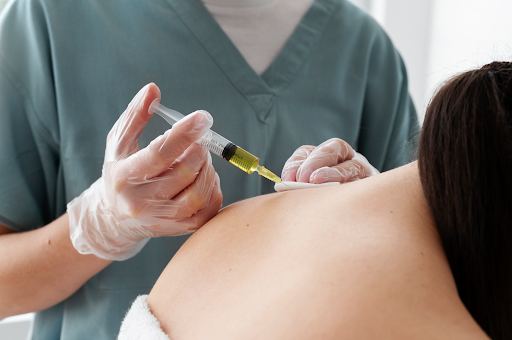
A cortisone injection offers short-term relief by treating inflammation. You need to transition to PRP therapy if your tendon pain returns frequently.
Key Takeaways
- Diminishing Returns: Patients should transition to PRP therapy when the pain relief windows of repeated cortisone shots begin drastically shortening, indicating the steroid is no longer effective.
- Safety Limits: Cortisone injections are restricted to a maximum of 3 to 4 times a year per target area because repeated use causes structural tendon weakening and joint degeneration.
- Targeted Healing for Low Blood Supply: PRP is highly superior for chronic tendon injuries (like tennis elbow or Achilles tendinitis) because it delivers growth factors directly into tissues that naturally suffer from poor blood circulation.
- Strict Anti-Inflammatory Ban: Unlike cortisone treatments, PRP requires patients to strictly avoid anti-inflammatory medications (like Advil or Ibuprofen) before and after the procedure to avoid blocking the body’s natural healing response.
Considering a cortisone shot for chronic tendon pain results in instant relief. What is actually frustrating is that the pain can return after a few weeks and is worse than before. This is where the limitation of cortisone shots comes. In such cases, patients seek PRP injections.
In this blog, we will discuss when a person needs to consider PRP therapy for stubborn tendon pain over cortisone injections.
What are Cortisone Injections?
Cortisone injections refer to a minimally invasive procedure where a powerful anti-inflammatory medication (corticosteroid) is directly injected into a painful or inflamed area of your body. Such injections are used to treat conditions like arthritis, bursitis, or tendinitis.
Working Process
Referring to cortisone injections, a mixture of corticosteroid (like triamcinolone or methylprednisolone) and a numbing agent (like lidocaine) is injected into the affected area. This ensures quick pain relief that wears off within a few hours. We administer this procedure via guided ultrasound imaging.
Within a few days, the cortisone kicks in. When the steroid is deposited into the joint, it interacts with your cells while blocking the chemical signals that lead to inflammation. Because of the close linkage between pain and inflammation, the minimization of swelling lowers the associated pain.
Benefits
The main benefits of cortisone shots are:
- Quick relief
- Improved mobility
- Lasting results
- Targeted treatment
Limitations
The major limitations of cortisone injections include:
- Temporary relief
- Tendon weakening
- Cartilage and joint degeneration
What is PRP Therapy?
Platelet-Rich Plasma (PRP) treatment refers to a regenerative process where patient’s own blood is used to accelerate tissue regeneration and healing. This procedure is mainly considered for tendon injuries, hair loss, osteoarthritis, etc.
Working Process
In PRP therapy, a small amount of blood (around 15 to 30 ml) is drawn from the vein of a patient’s arm. This is placed into a centrifuge that spins rapidly to separate the blood into RBC, WBC, and plasma.
The plasma layer is separated and is highly concentrated with platelets. This is injected directly into the injured area. At Docteur Douleur, this is done under precise ultrasound guidance.
Benefits
PRP injections come with a range of benefits, like:
- Minimally invasive
- Accelerated natural healing
- No risk of rejection
Limitations
The key drawbacks are:
- Limited standardization
- Variable efficacy
- Procedural risks
Let’s compare the two.
| Feature | Cortisone Injections | PRP therapy |
| Key mechanism | Strong anti-inflammatory steroid that stops local inflammation | Concentrated platelets from patient’s own blood release growth factors that signal tissue repair |
| Time to relief | Quick (within 24 to 72 hours) | Slow (around 4 to 6 weeks) |
| Duration of effect | Temporary (usually 2 to 3 months) | Long-lasting (around 6 to 12+ months) |
| Frequency | 3 to 4 times a year in a joint | Single injection or a short series of 2 to 3 sessions |
Table: Cortisone vs PRP therapy
When Should You Stop Cortisone and Consider PRP Therapy?
A cortisone shot is not always a perfect consideration for chronic tendon pain. Here are the situations when you need to rely on PRP therapy over cortisone injections.
Drastic Shortening of Pain Relief Windows
With cortisone shots, your pain relief window tends to reduce. Like, your first shot might keep you away from pain for six months whereas the second one can offer relief for three months.
What if your third shot gives you relief from pain for just a few weeks? Well, this indicates that the steroid is unable to suppress the inflammation. Hence, you need to consider PRP therapy.
Approaching the Safe Cortisone Limit
There is a limitation on the number of cortisone shots in a year. At Docteur Douleur, we offer 3 to 4 injections on a target area in a year.
You might witness that your annual limit is approaching but you have a stable pain or the pain is returning. This is a clear case of going for PRP therapy as cortisone injections are no longer effective for you.
Dealing with Chronic Tendon Injury
Cortisone is a good choice for joint space inflammation for fluid-filled sacs. If you deal with chronic tendon injury like Achilles tendinitis or tennis elbow, this is not the right choice.
Tendons have poor blood supply. Regarding PRP therapy, concentrated growth factors are directly injected into the tendons to begin the repair procedure. This makes the procedure a suitable one for tendon injury recovery.
Seeking a Long-Term Solution to Postpone Injury
Are you planning to delay your joint replacement surgery? If so, PRP therapy must be a priority over cortisone shots. This treatment stabilizes the joint environment, thereby slowing down the degenerative procedure.
Wrapping Up
The PRP therapy is prioritized over a cortisone shot when your pain relief window is shortening, your annual limit is approaching, or you are dealing with chronic tendon injury. With the right expert guidance and administration, you can obtain the best results from the PRP therapy.
Planning to Recover from a Tendon Injury?
We are a reputable pain management clinic in Canada with the successful history of administering cortisone shots and PRP injections. Visit our clinic and interact with our experts to understand whether you need the PRP therapy. Get the treatment done, and obtain relief from pain.
Frequently Asked Questions (FAQs)
1. How Should I Prepare for a PRP Injection Versus a Cortisone Shot?
Cortisone injections require minimal preparation. Well, the preparation is stricter for a PRP therapy. Stop anti-inflammatory medications a week before the procedure. You need to hydrate heavily on the day before the test. This makes the blood draw more seamless, thereby maximizing the volume of collected plasma.
2. What are the Side Effects of PRP Therapy?
The temporary side effects of PRP therapy are redness, swelling, and bruising at the targeted area. These symptoms peak within 48 hours because of the stimulation of the natural healing process of the body. As this procedure uses the patient’s own blood, the risk of allergic reaction is low.
3. How PRP Therapy Carries Procedural Risks if it Uses my Own Blood?
The PRP therapy uses your own blood but there is a procedural risk. Like, there might be localized infection at the injection site, or nerve irritation, or damage during the insertion of the needle. There is a chance of increased swelling caused by the natural inflammatory response necessary for tissue healing.
4. What are the Immediate Restrictions on Physical Activities after PRP Therapy?
You need to ensure that the target area is kept strictly at rest for the first 48 hours. Here, you need to avoid any strenuous activity, heavy lifting, or aggressive stretching. You should limit your physical activities to regular basic tasks.
5. Can I Consider Pain Relievers if I Experience Severe Soreness after a PRP Injection?
You can take it but you need to be specific about the pain relievers. Like, acetaminophen (Tylenol) is safe for post-procedure soreness. You should avoid anti-inflammatories like Ibuprofen, Advil, Aleve, or Motrin) for a couple of weeks after PRP.